Rethinking digital bureaucracy
in Germany, mobile first

As part of a design project at the University of Applied Sciences Potsdam, we explored how public administration in Germany could become more accessible and efficient. We focused on everyday processes such as address registration, which still require waiting times, in-person appointments, and paperwork.
Through desk research, expert interviews, and citizen conversations, we identified structural barriers including media discontinuity and usability gaps. Based on these insights, we developed a mobile-first concept aligned with government guidelines (OZG) that reduces friction in digital bureaucracy.
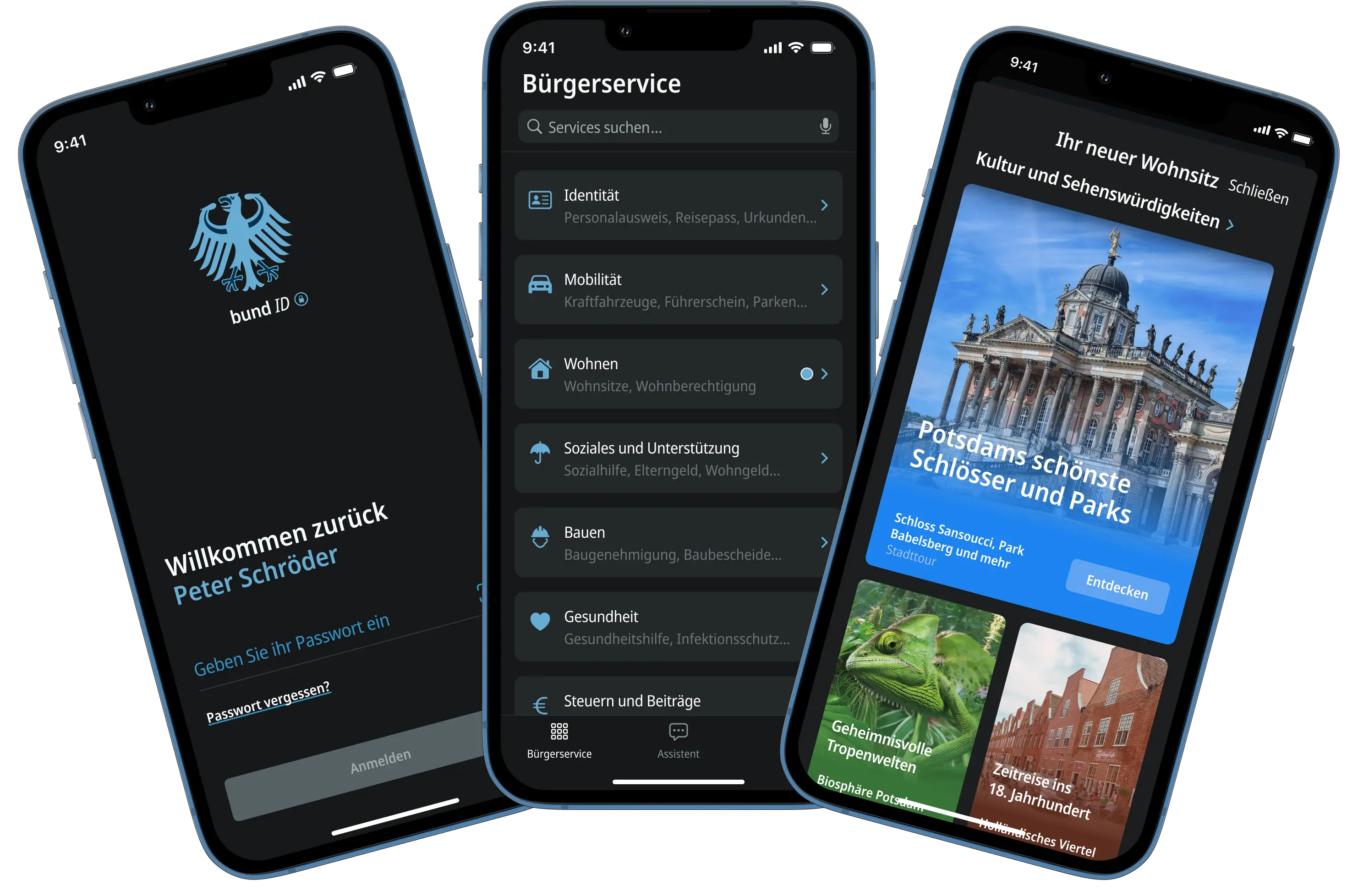
The result is a mobile bundID concept that unifies core services, integrates secure digital identification, and enables citizens to complete administrative processes independently.
Role
Design
Interviews
Workshop
Presentation
timeline
Nov. 2024 –
Jan. 2025
team
Niclas Stengel
Kilian Wachowiak
Challenge
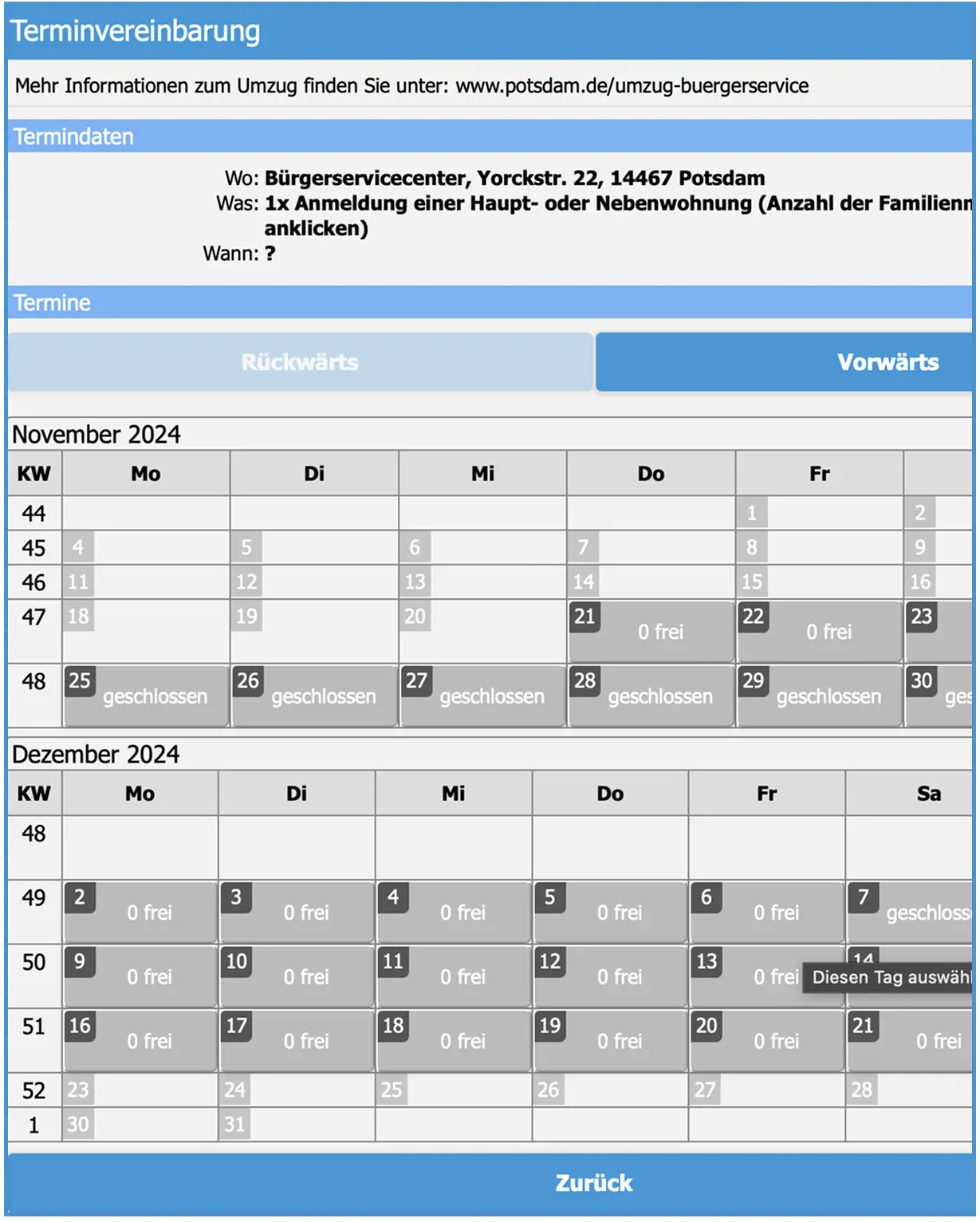
Accessing citizen services in Germany often involves long wait times, in-person appointments, and paper-based processes. Even digital applications require physical verification or are printed for processing, slowing procedures and frustrating both citizens and institutions. Our challenge was to address the structural barriers preventing truly digital public services.
Approach
How might we improve the efficiency and accessibility of online public services, with a focus on digital appointment booking?
We initially aimed to optimize Potsdam’s official citizen service website. But early research revealed structural workflow disruptions that a visual redesign could not resolve. We therefore reframed the challenge at a systemic level and built a mobile-first service model centered on the bundID to enable seamless digital registration.
Research
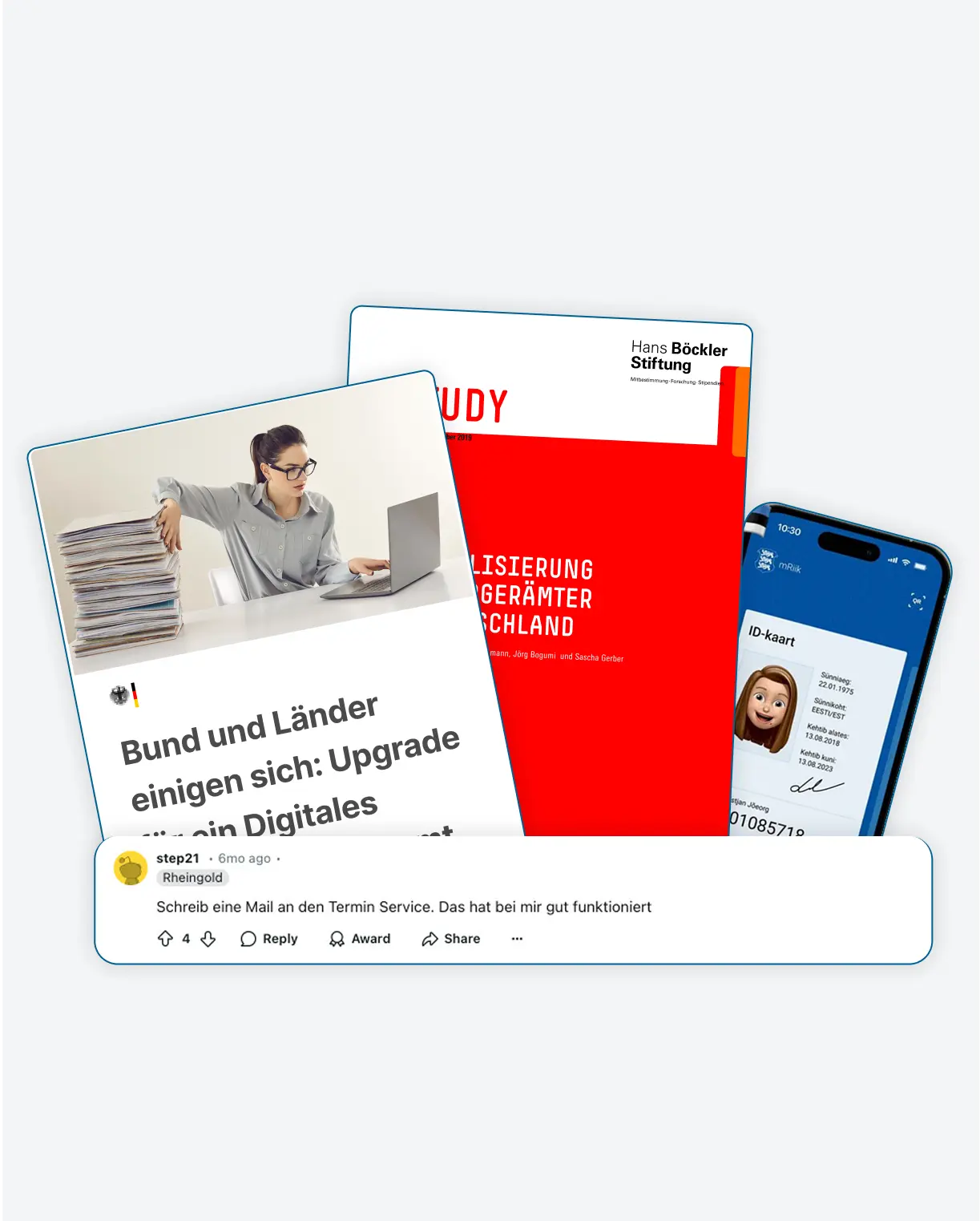
We began with desk research to understand the broader context, analyzing policy papers, media coverage, social discourse, and best-practice examples from countries such as Estonia and the UK. Our aim was to identify structural challenges and opportunity areas within digital public services, as well as public sentiment toward the topic.
We identified structural issues such as media discontinuity, fragmented IT infrastructure, and outdated verification processes. A remark in the Berliner Morgenpost captured this frustration succinctly:
“It drives me crazy that no one in this city can get an appointment at the Bürgeramt to renew their ID or apply for a driver’s license. It’s such a mess.”
– Falko Liecke, Deputy Mayor of Neukölln
Interviews
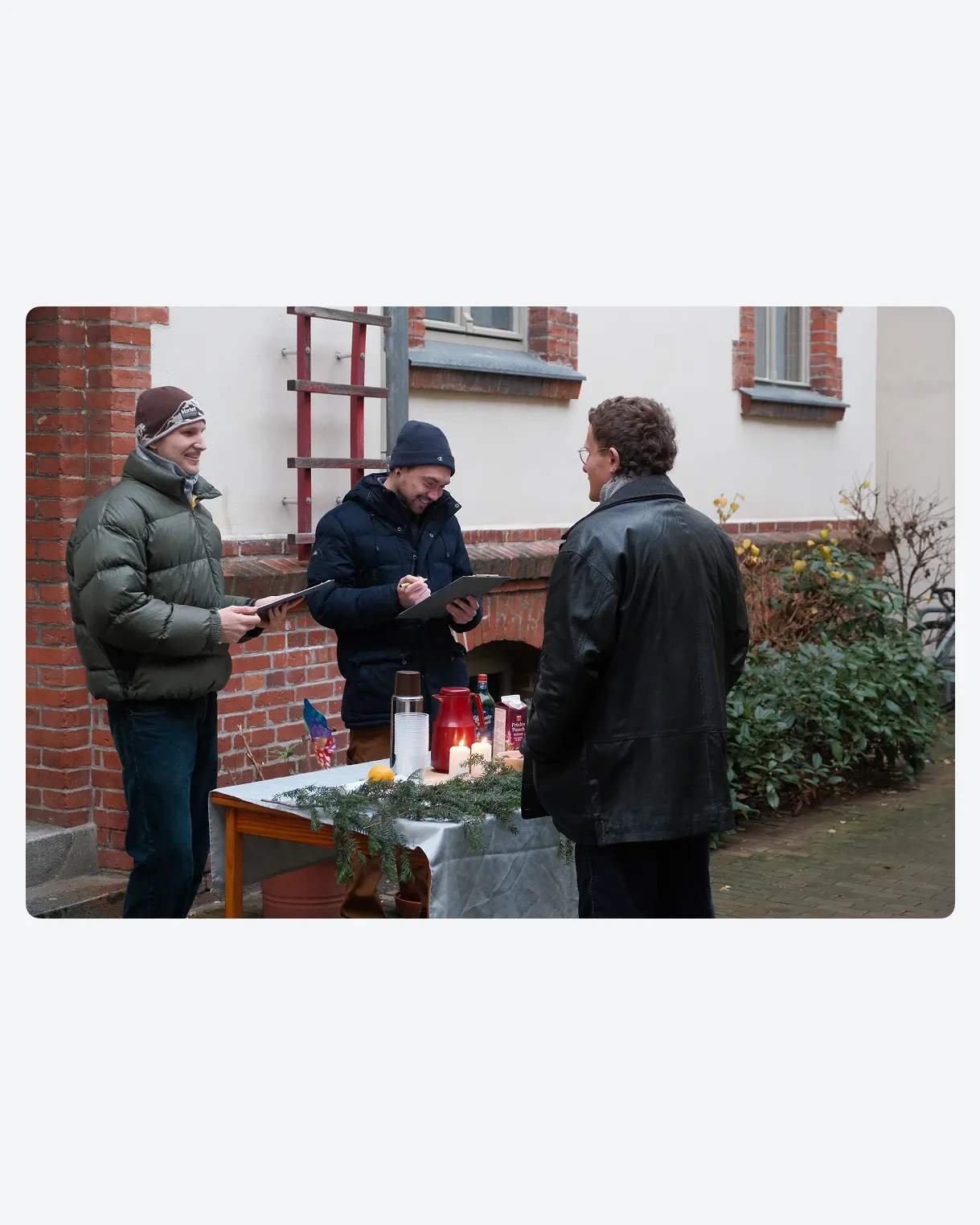
To validate and expand our findings, we conducted a field research in Potsdam’s city center. We designed and distributed a survey and set up a small stand near a Christmas market on the first Sunday of Advent.
Visitors were invited for gingerbread and mulled wine while we gathered insights into their experiences with local citizen services and expectations for digital administration.
The interviews revealed recurring pain points:
  • Long waiting times for appointments
  • Mandatory in-person document pickup
  • Limited digital service options
  • Unclear and inconsistent communication
Expert Interview
To ground our concept in administrative realities, we conducted a two-hour interview and ideation workshop with the head of the Citizen Services Office in Berlin Friedrichshain-Kreuzberg. The session provided direct insights into internal workflows, technical constraints, and regulatory timelines such as the OZG. It validated several of our assumptions while challenging others.
Workshop
“If you could design your ideal service for registering a new address, what would it look like? Feel free to think out loud and walk us through the process step by step.”
– Prompt given to the participant
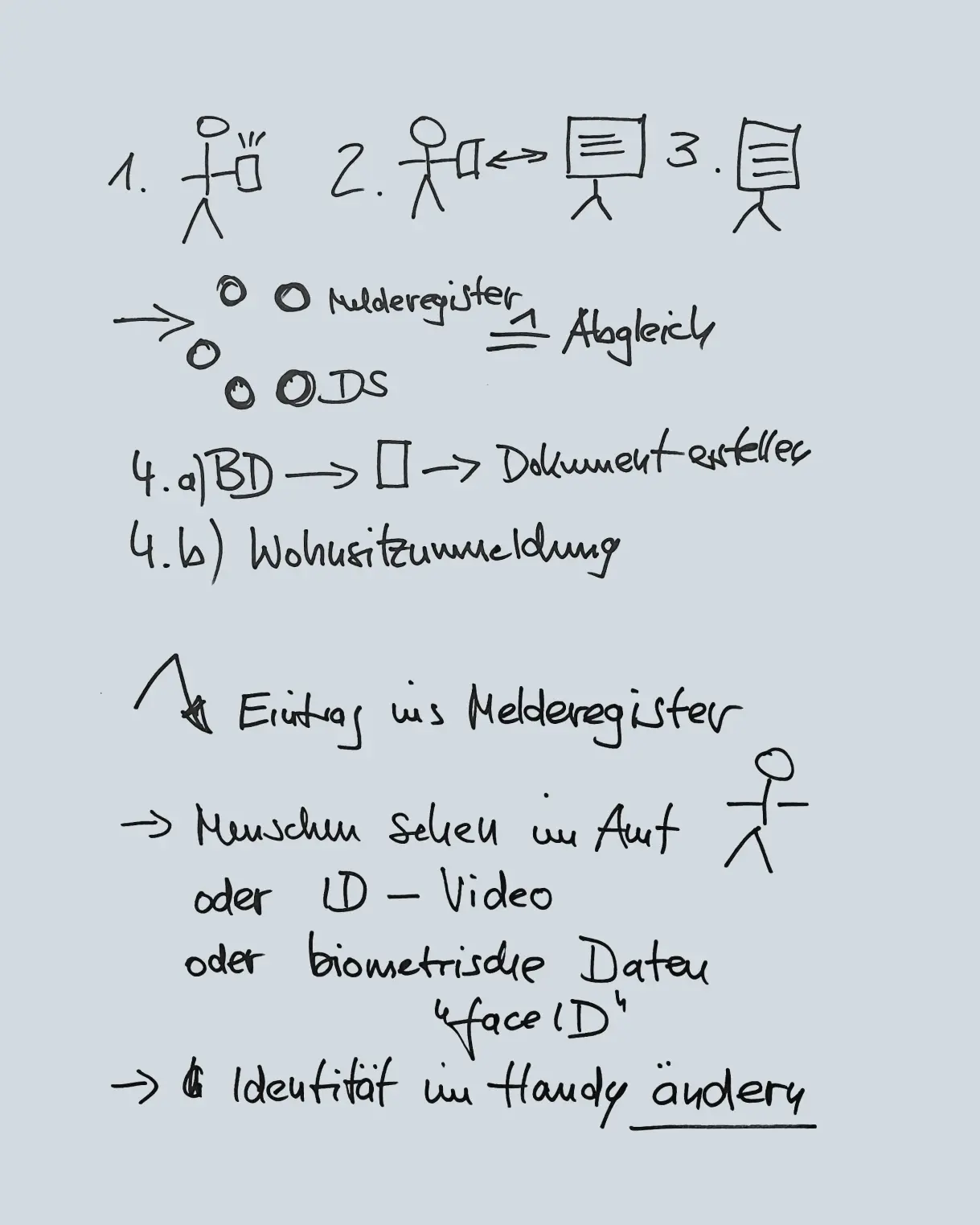
A central part of the session involved mapping an ideal future scenario for address registration.
This helped identify critical system touchpoints, clarify the IT landscape, and define where digital services could add measurable value. The workshop reinforced the need to reduce media discontinuities, streamline authentication, and align services with both administrative requirements and citizens’ everyday needs.
Design
We began the design phase by analyzing existing analog and digital user flows for address registration. We mapped all required steps and documents, integrating user needs derived from interviews, the expert workshop, and international best practices. Based on this synthesis, we explored alternative flow structures and aligned on a solution optimized for clarity and efficiency.
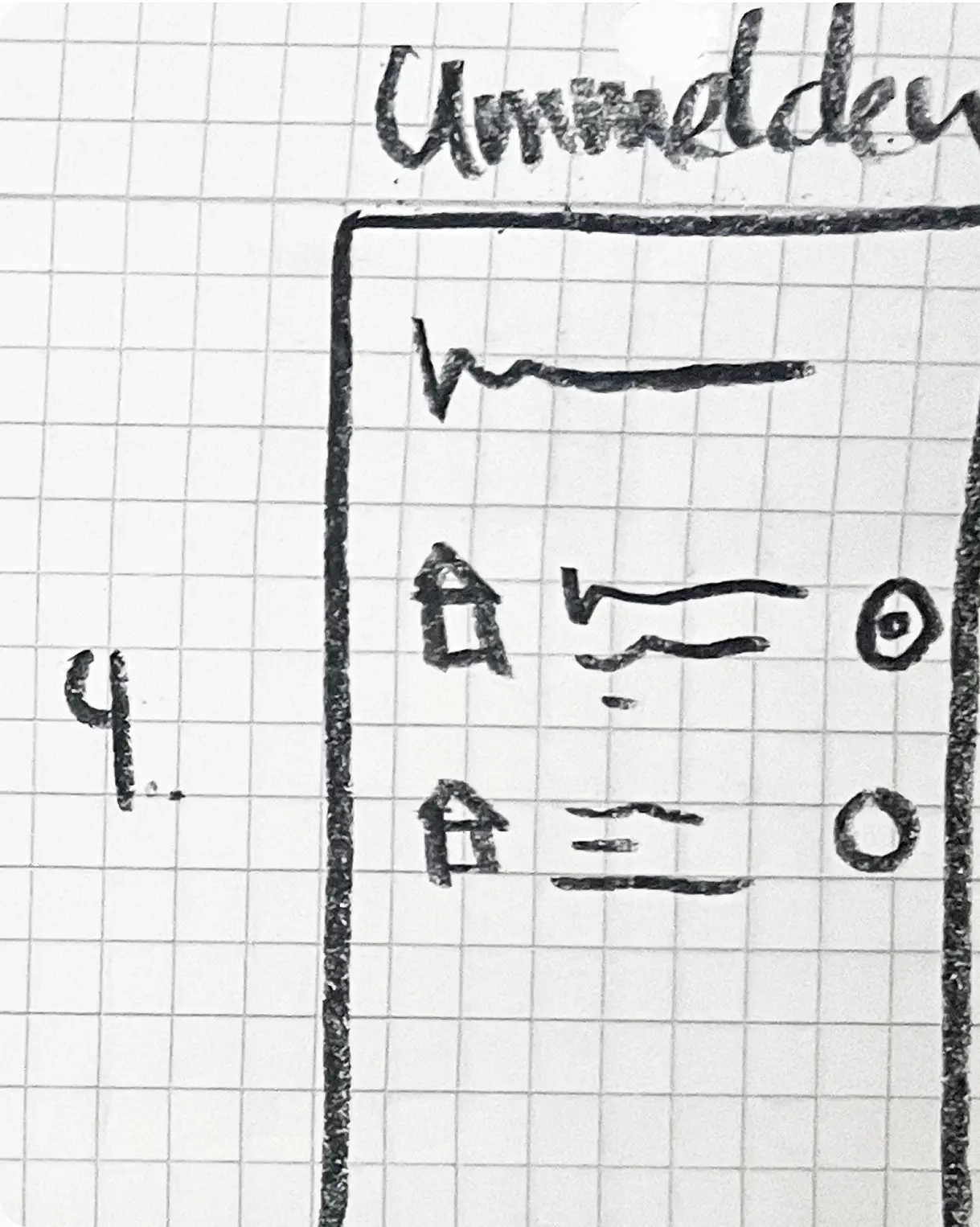
We structured the user flow into logical sections and translated them into individual screens.  Based on that, we sketched an initial paper prototype. We then refined the concept by mapping each flow element to its corresponding wireframe.
Design System
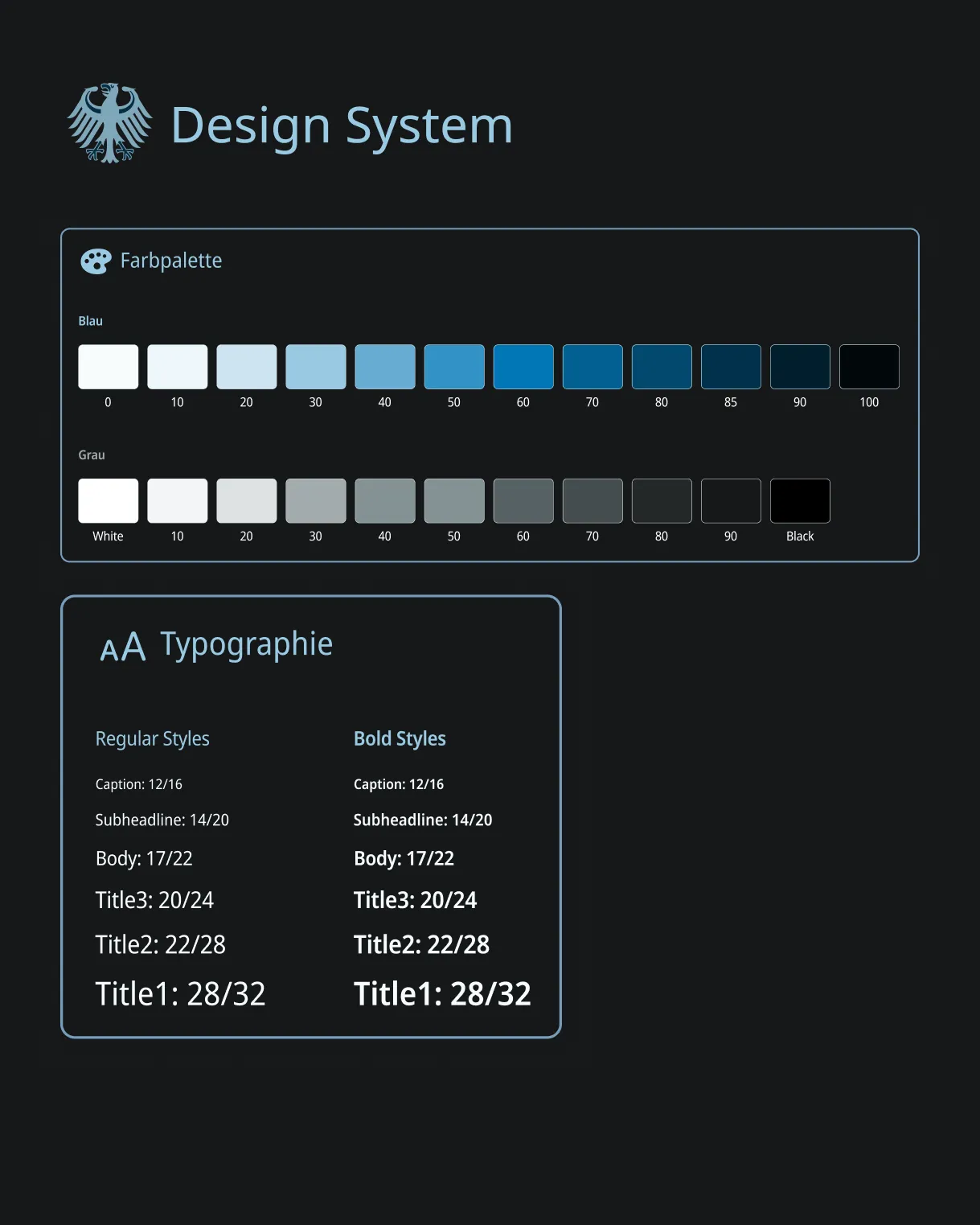
After finalizing the concept and core flows, we defined design tokens in Figma, including typography, color, and spacing, aligned with the official federal design guidelines.
Visual Design Process
We adopted a mobile-first approach to ensure the service is accessible from anywhere and optimized for everyday use. The initial interface was designed in dark mode to create a modern and focused visual experience. In a real-world implementation, both light and dark modes would be available to ensure accessibility and user preference flexibility.
We then developed high-fidelity prototypes and tested them iteratively with fellow students. Each round informed refinements in hierarchy, spacing, and interaction patterns to balance functional density with visual clarity.
Entry Points
The following section highlights key features and walks through an exemplary user flow: Registering a new address
Login
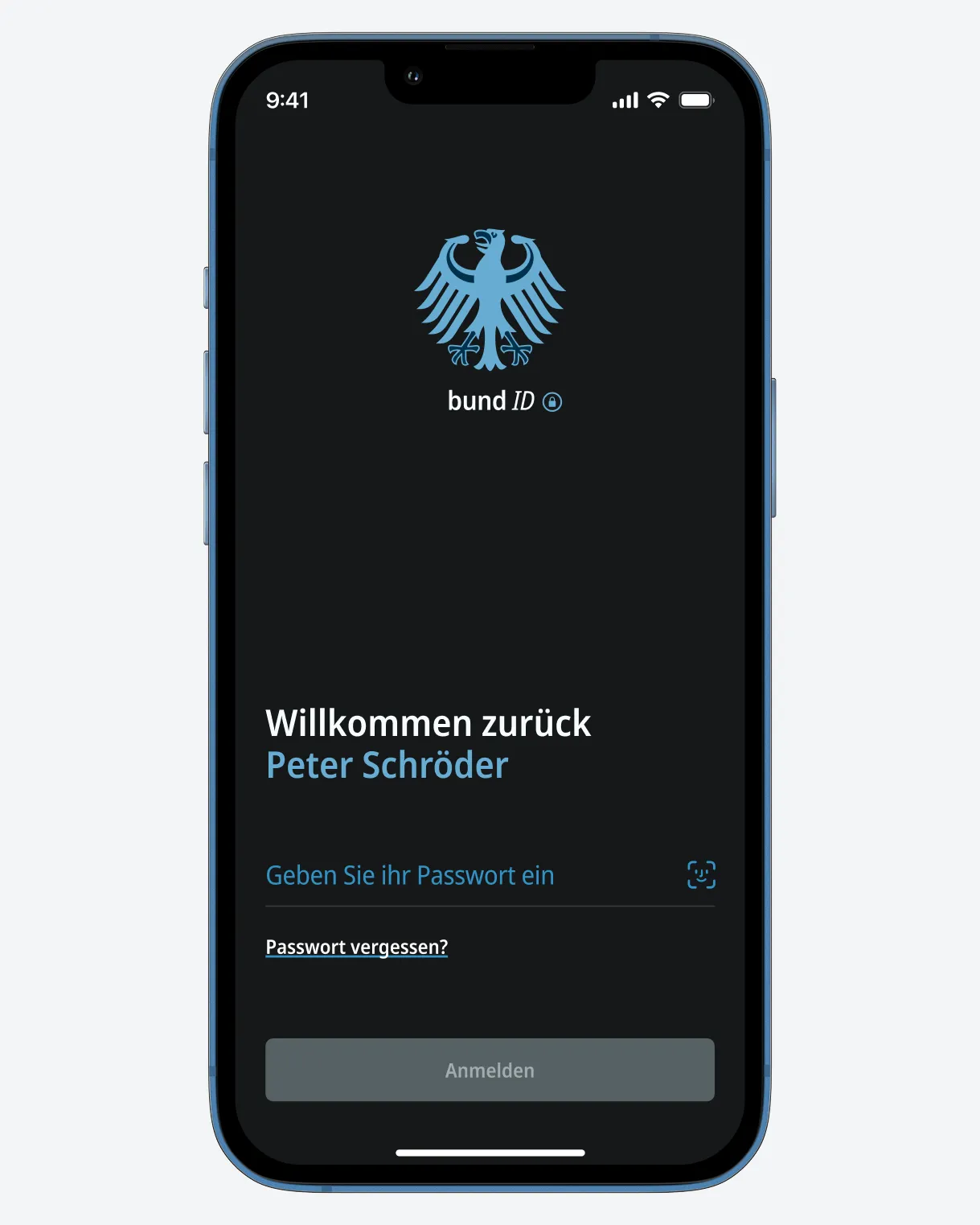
The initial login combines NFC-based ID registration and video identification with a later ongoing biometric access for subsequent use. Security and data protection were recurring themes in our research, making a robust but low-friction authentication flow essential.
Overview
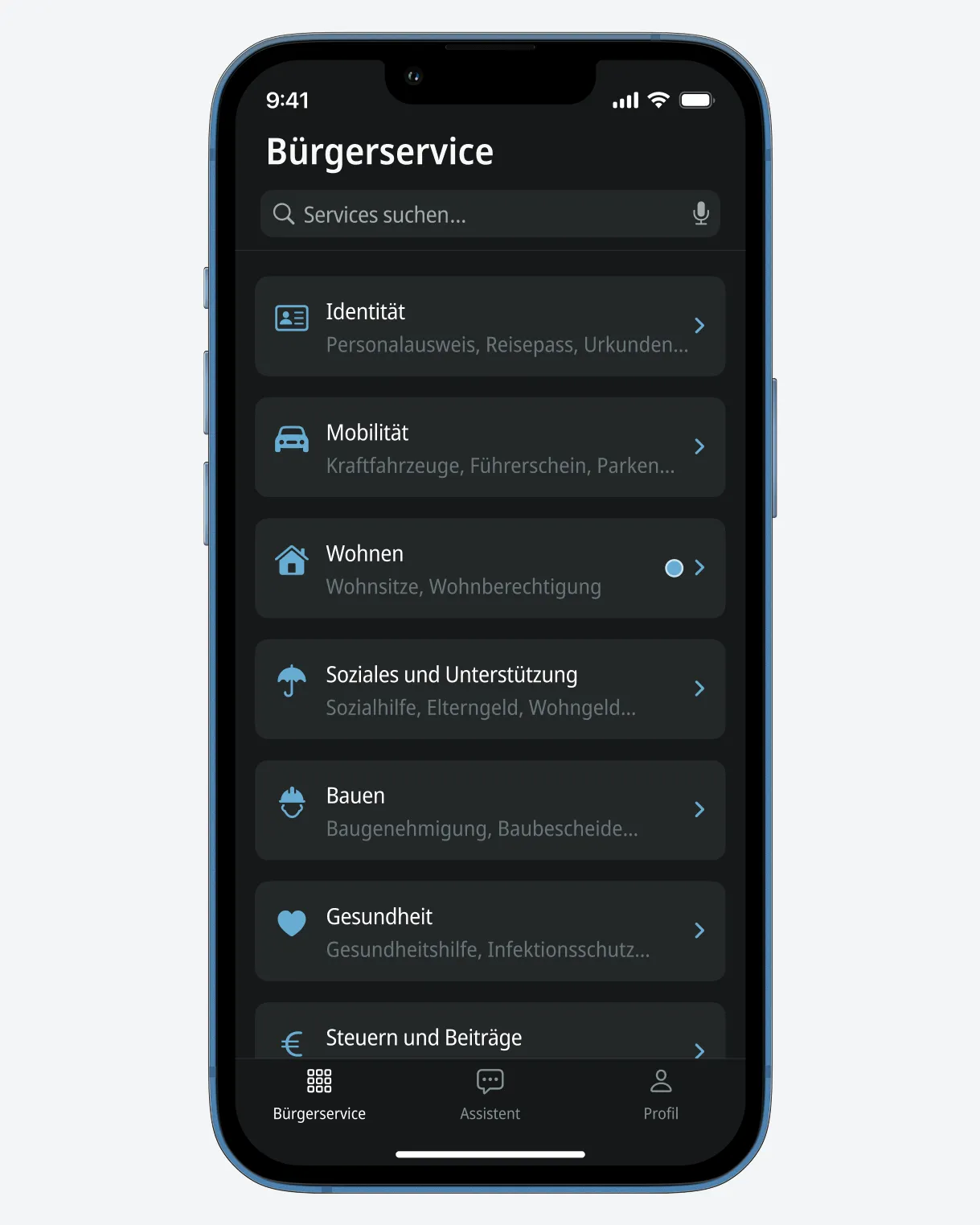
The service overview uses a structured list layout to organize the wide range of citizen services clearly and accessibly for mobile use.
Userflow
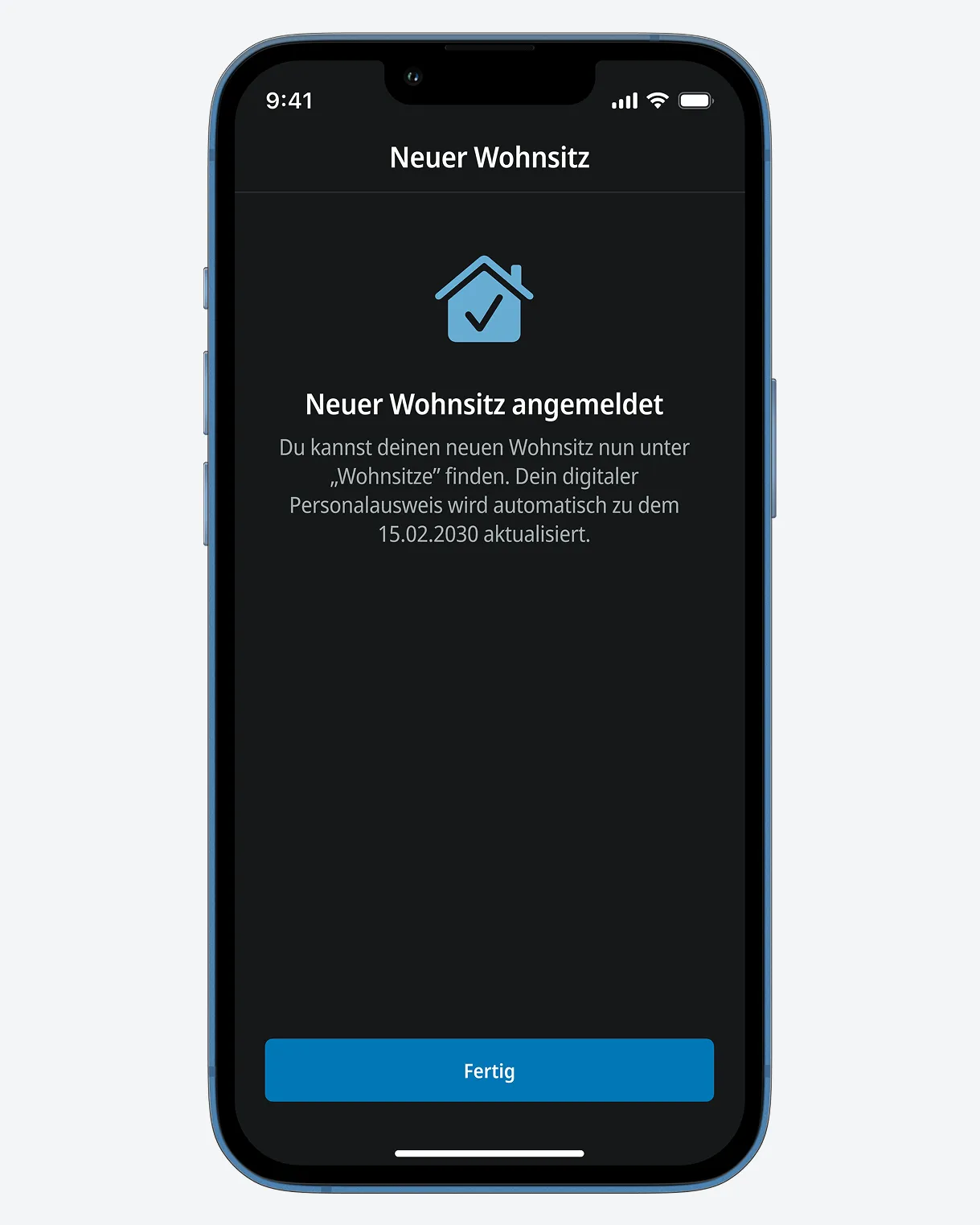
The flow begins with a notification informing the user that a new address has been added. In this case, the landlord has already submitted the relevant details, making key information immediately available in digital form.
Instead of entering all data manually, the user can review the pre-filled information and continue the registration process.
From there, users can initiate the registration process and review the pre-filled details, including landlord information and contract start date. They choose whether to register the address as a primary or secondary residence and can adjust any information if needed.
The process is designed to keep administrative steps transparent and manageable. A final summary screen provides a clear overview before submission, allowing users to confirm their details with confidence.
Once submitted, the new address is officially recorded and reflected in the system.
eID and more
follow-up services
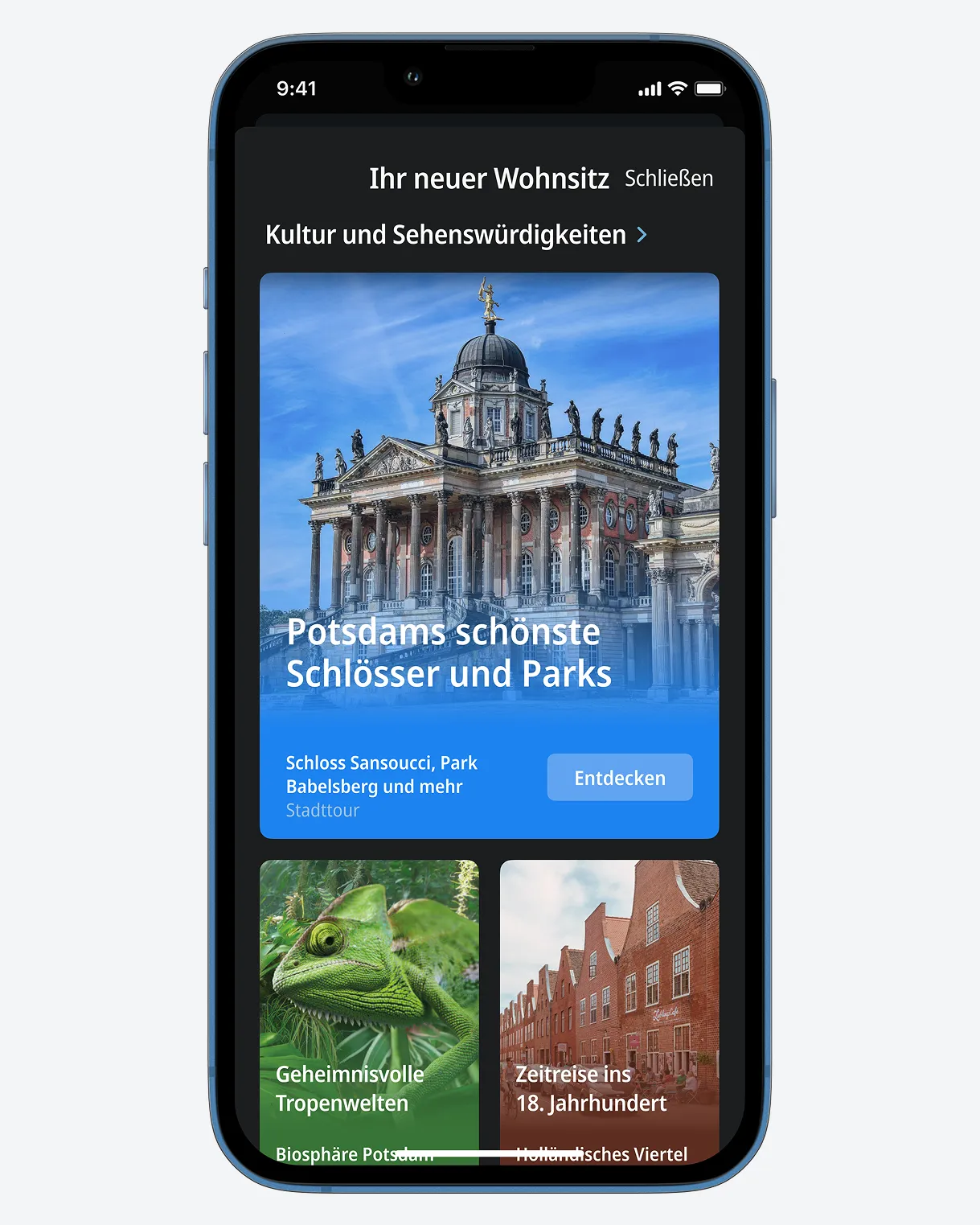
After completing the registration, users are presented with an action sheet offering relevant follow-up services and local information. These include options such as daycare availability, job search support, leisure activities, and vehicle registration, helping ease the transition into a new place of residence.
e-id
The integrated eID further simplifies the process. Instead of updating a physical ID card, the new address is reflected digitally and can be synchronized with the user’s smartphone wallet. This allows immediate identification with the updated residence.
Prototype Userflow
Sometimes a video explains it best. The screencast below walks through the full flow, from login to confirming a new address.
Reflection
Digitalizing citizen services in Germany turned out to be a complex and systemic challenge. Balancing user desirability with technical and regulatory feasibility required continuous alignment and some trade-offs. We deliberately stepped away from the current state of digitalization in Germany to explore what public services could look like in the near future.
A large portion of the project was dedicated to research. Diving into political frameworks, administrative structures, and public discourse helped us understand the root causes behind existing inefficiencies rather than only addressing surface-level symptoms.
Working within a two-month timeline from initial research to a functional prototype required strict prioritization. In hindsight, a more balanced allocation between research and final validation would have allowed for additional usability testing and UI refinement.
The collaboration itself was both demanding and valuable. Strong perspectives within the team required clear communication and structured decision-making. A key personal takeaway was learning to separate design arguments from personal preferences and anchor decisions in research and feasibility.