Building confidence in teens overwhelmed by social anxiety

During my time as a streetworker in mobile youth services, I encountered social anxiety as a recurring and growing issue among teenagers. Many struggled to express themselves freely or build meaningful peer connections. Feelings of isolation intensified during the COVID-19 pandemic, when this project was developed.
To better understand these challenges, we applied cultural probes, surveys, and a co-creation workshop. Given the complexity of the topic, we approached it from a service design perspective to avoid superficial solutions.
The result was “Street Match”, a hybrid digital and analog game concept designed to support teenagers in reconnecting through playful real-life interaction.
Role
Survey
Cultural Probes
Workshop
timeline
October 2021 –
January 2022
team
Louis Edgar Tartz
Kilian Wachowiak
Challenge
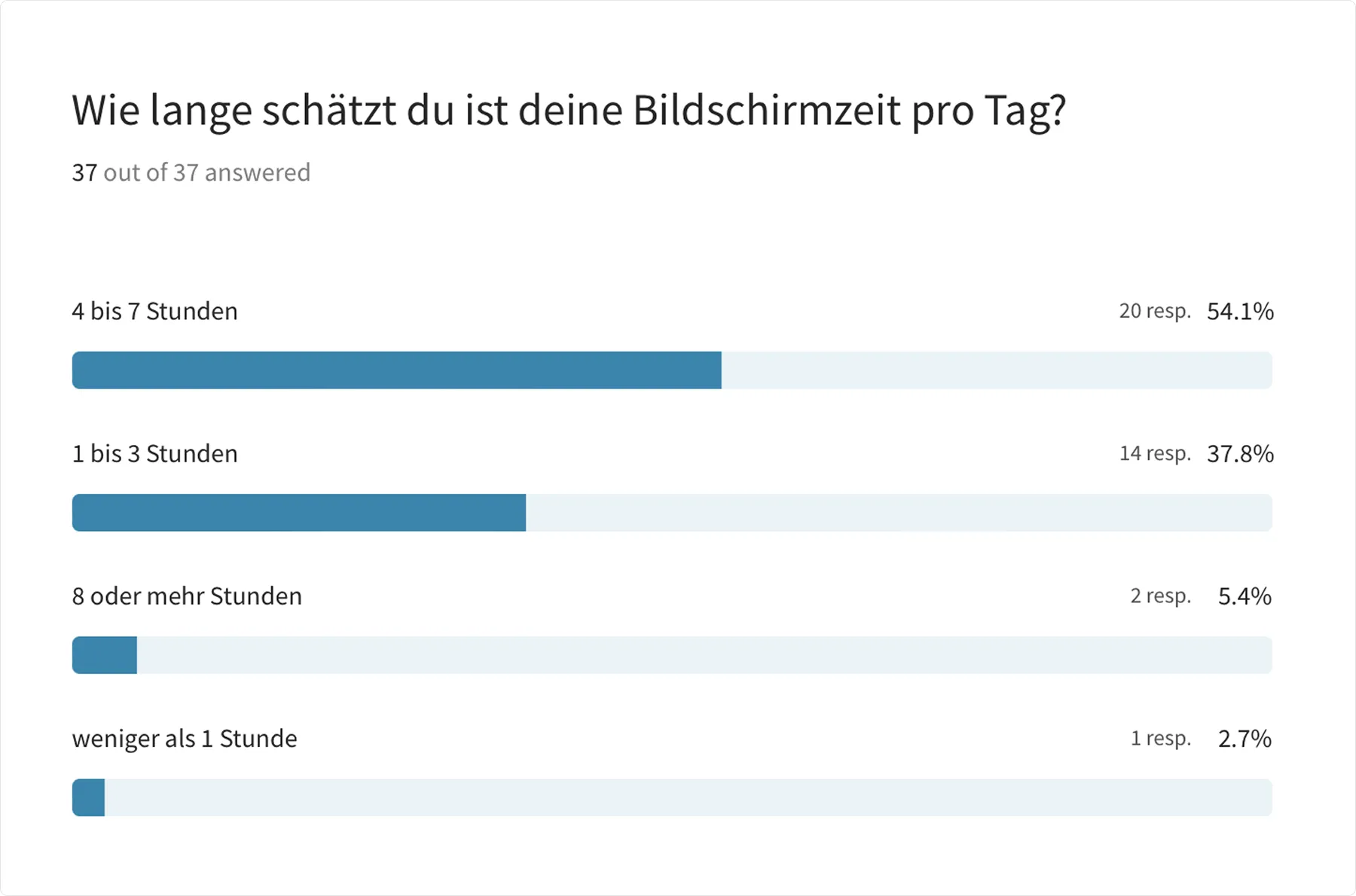
For many teenagers, the digital world became both coping mechanism and escape. Our survey showed that 12 to 17 year olds spent an average of four to seven hours per day on their phones, primarily on social media.
At the same time, many expressed a clear desire for real-life interaction but lacked the confidence and structure to initiate it.
Approach
To address this need, we developed Street Match through a co-creation process. The concept is grounded in service design and uses gamified elements to support offline interaction among teenagers.
The objective was to establish a structured and low-threshold framework that enables social exchange, builds confidence over time, and redirects existing digital habits toward real-world encounters.
Research
As our team was unfortunately no longer part of the teenage target group, we relied on multiple research methods to understand their perspective. We began with desk research to establish a foundation, followed by an online survey to validate initial assumptions.
To gain deeper qualitative insights, we conducted cultural probes. After analyzing the material, selected participants were invited to an online co-creation workshop via Zoom and Miro.
Survey
To gain an initial understanding of teenagers’ online behavior and its impact on emotional well-being, we conducted an online survey. The questionnaire addressed daily screen time, preferred platforms, and perceived emotional effects after extended use.
We received 37 valid responses from teenagers aged 12 to 17.
“What’s your typical screen time?”
“What’s your favorite thing to do online?”
“How often do you meet your friends in person on average each week?”
Most participants reported spending between 4 and 7 hours per day on social media, primarily on Instagram and TikTok. While many described feeling drained or unmotivated after prolonged scrolling, they also identified social media as an important source of connection and belonging.
Cultural Probes
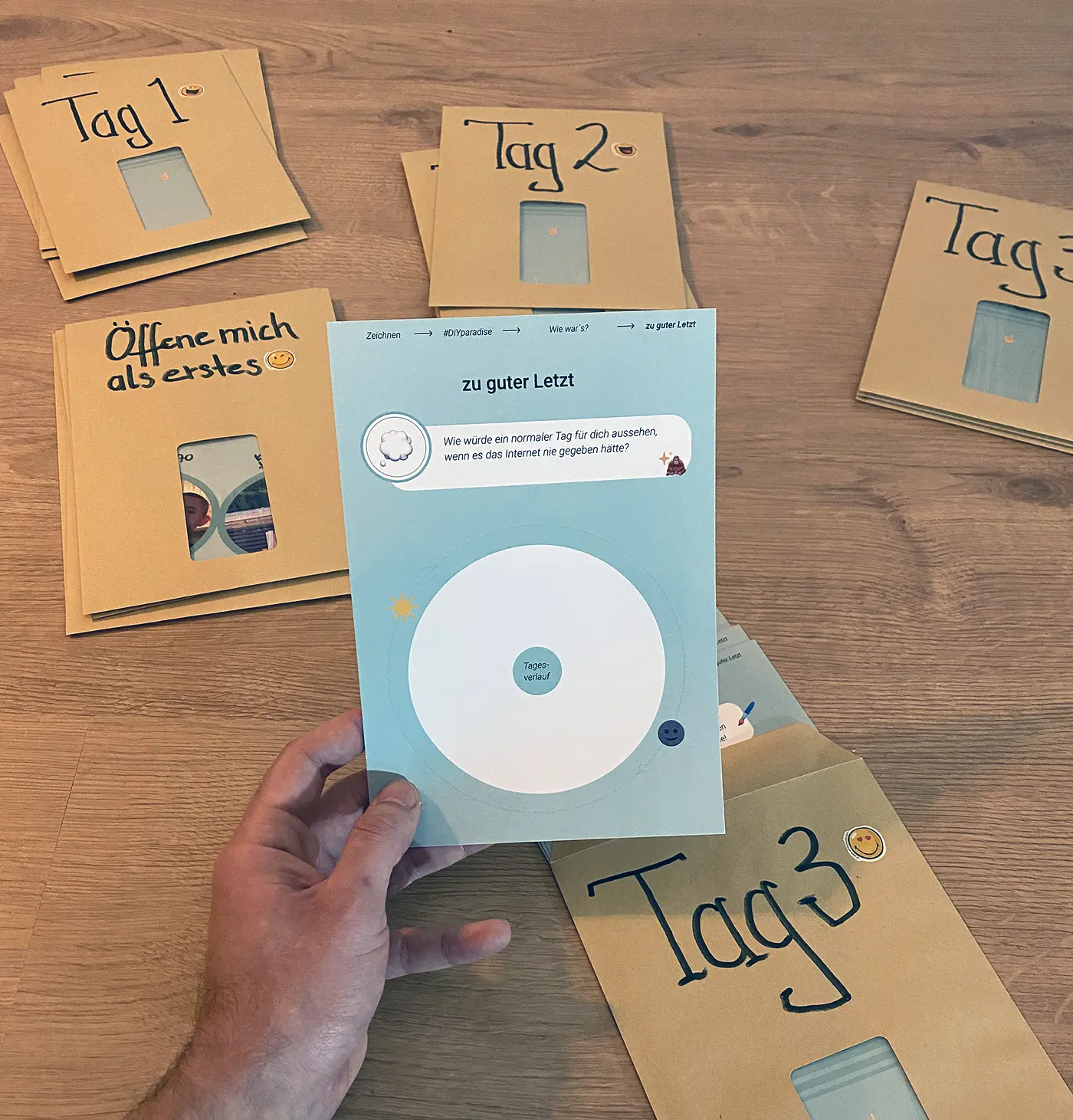
We conducted the probes with six participants aged 12 to 17 of mixed gender. Each received a set of materials guiding them through short reflection and drawing tasks over a period of four days.
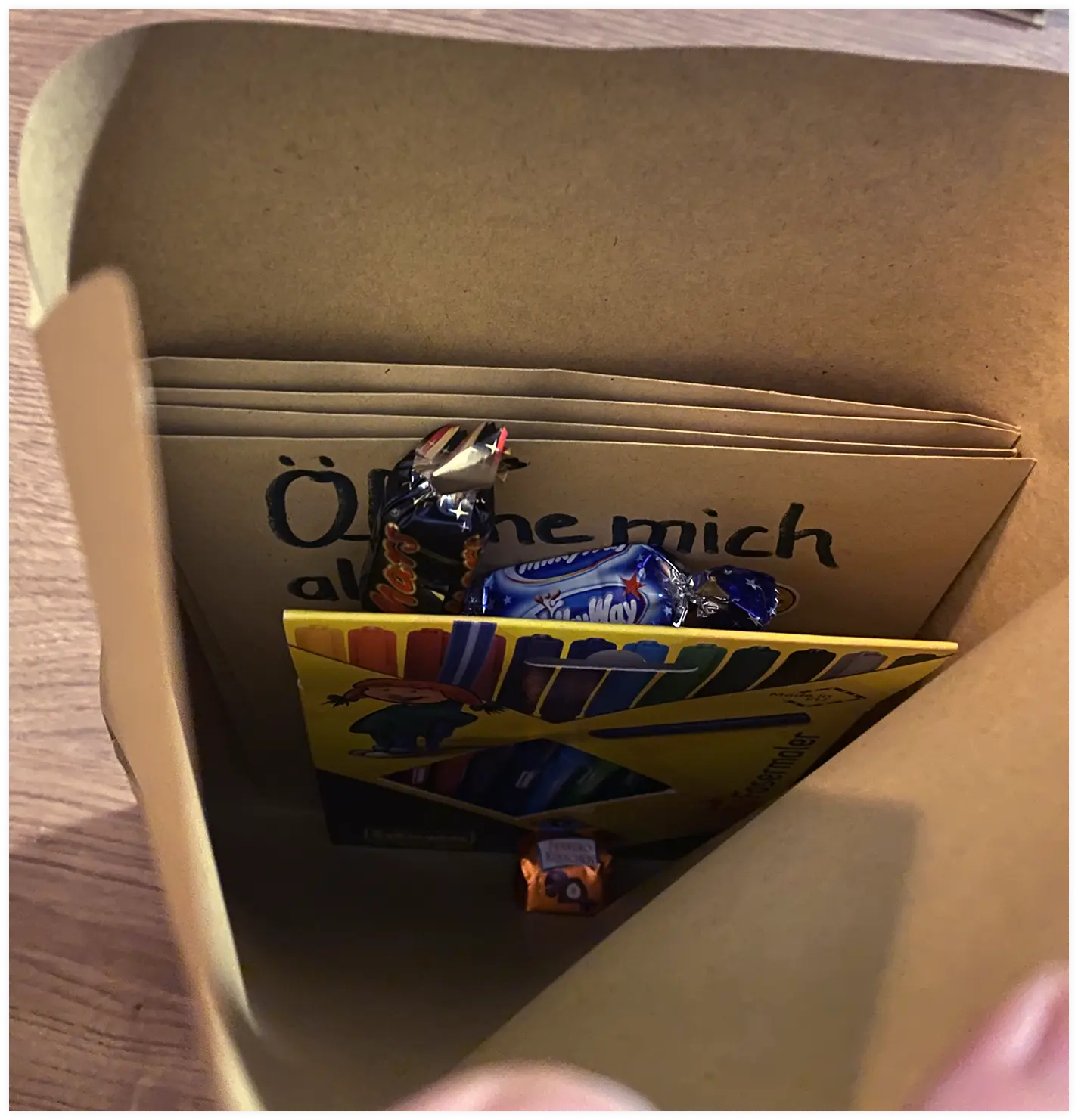
For the probes to be effective, participation needed to feel voluntary and engaging rather than obligatory. We therefore paid close attention to tone and task design. Each probe package was conceived as a small gift and included simple materials such as felt pens, stickers, and a few sweets to lower the threshold for participation.
Over four days, participants completed a series of interconnected reflection tasks, each focusing on a different aspect of their daily lives. This structure allowed us to gather insights into routines, emotions, and motivations. A example of tasks included:
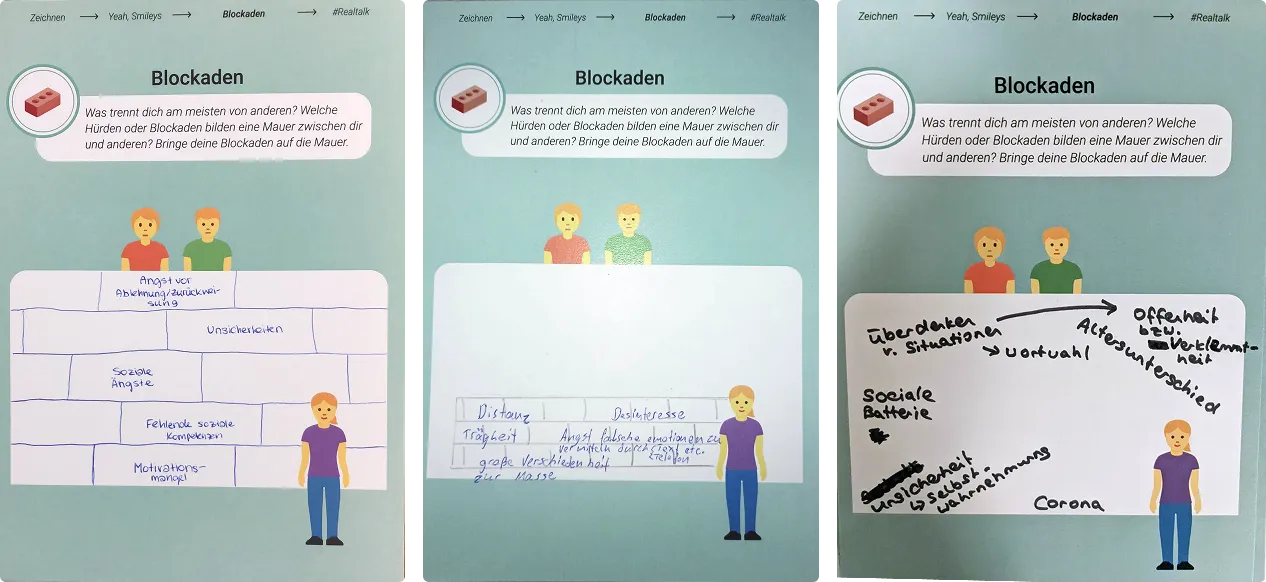
“What separates you most from others? What hurdles or barriers form a wall between you and other people? Visualize your barriers on the wall.”
–Task sheet “Blockaden”
The analysis proved time intensive due to the depth and volume of the material. In retrospect, expertise in psychology or a related discipline would have supported a more nuanced interpretation of some findings.
The images shown were created by the participants as part of the task sheet titled “Blockaden” and shared with us via WhatsApp. They illustrate how the exercises were approached and how thoughts were visually expressed.
Cultural Probes Key Insights
The key insights gathered from the probes were as follows:
  • Fear of rejection and being judged
  • Difficulty initiating contact or starting conversations
  • A lack of natural situations that make interaction feel comfortable
  • Small age differences perceived as social barriers
  • Limited shared interests within peer groups
  • Pressure to perform and fit in
  • Reduced opportunities for real-life interaction during COVID-19 and uncertainty about reconnecting afterwards
  • A strong desire for acceptance, recognition, and improved social competence
Co-Creation Workshop
After analyzing the cultural probes, we invited four participants to a co-creation workshop. Due to COVID-19 restrictions, the session was conducted online via Zoom and Miro.
The aim was to build on the collected insights and collaboratively explore directions for a concept aligned with the needs of the target group.
Introduction, Icebreaker
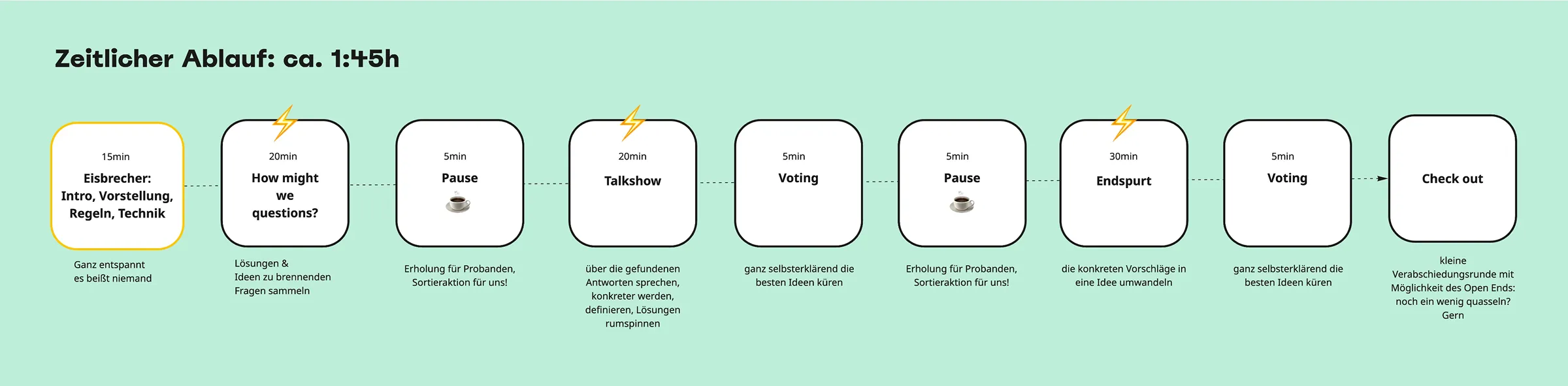
The workshop was structured into several phases and lasted 1 hour and 45 minutes. It began with a brief introduction covering the agenda, expectations, and a short tutorial on using Miro.
An icebreaker activity followed to establish a relaxed atmosphere and encourage participation.
How Might We
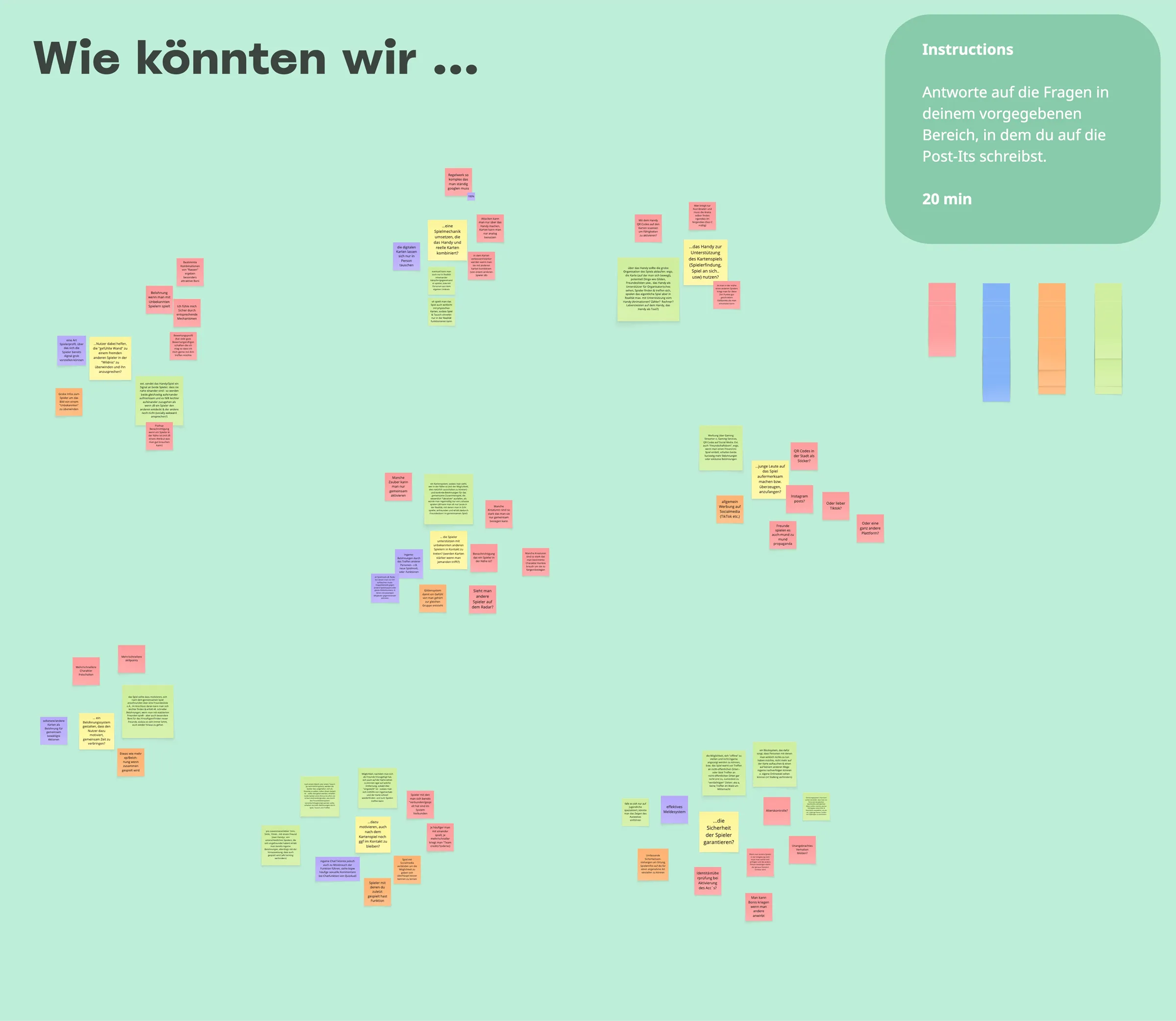
In the next phase, we introduced “How might we” questions as prompts for idea generation. For example:
“How might we ... support players in connecting with new people?”
– Prompt given to the participant
Participants shared their ideas via digital post-its in Miro, discussed them collectively, and voted afterwards.
“In-game rewards for meeting other people, such as new game modes or features”
– Participant
During the break, we clustered the contributions, reflected on the outcomes, and reorganized the board to provide a clearer structure for the following tasks.
Vote, Ideate, Vote Again
In the following exercise, each participant developed an initial idea, which was then passed on and expanded by the others. This iterative process generated a broad range of concepts, from small interaction-based game mechanics to larger service-oriented approaches.
Afterwards, we voted on the most promising directions and jointly explored potential project names. “Street Match” received the most support and became the working title of the concept.
Workshop Outcome
Organizing the session was demanding due to the small and sensitive participant group. The workshop nonetheless generated valuable perspectives and led to a concrete concept, which was the primary objective.
Final Concept
Based on insights from the survey, cultural probes, and workshop, we developed a structured concept for Street Match. The core vision had already been shaped during the ideation phase and required only minor refinements.
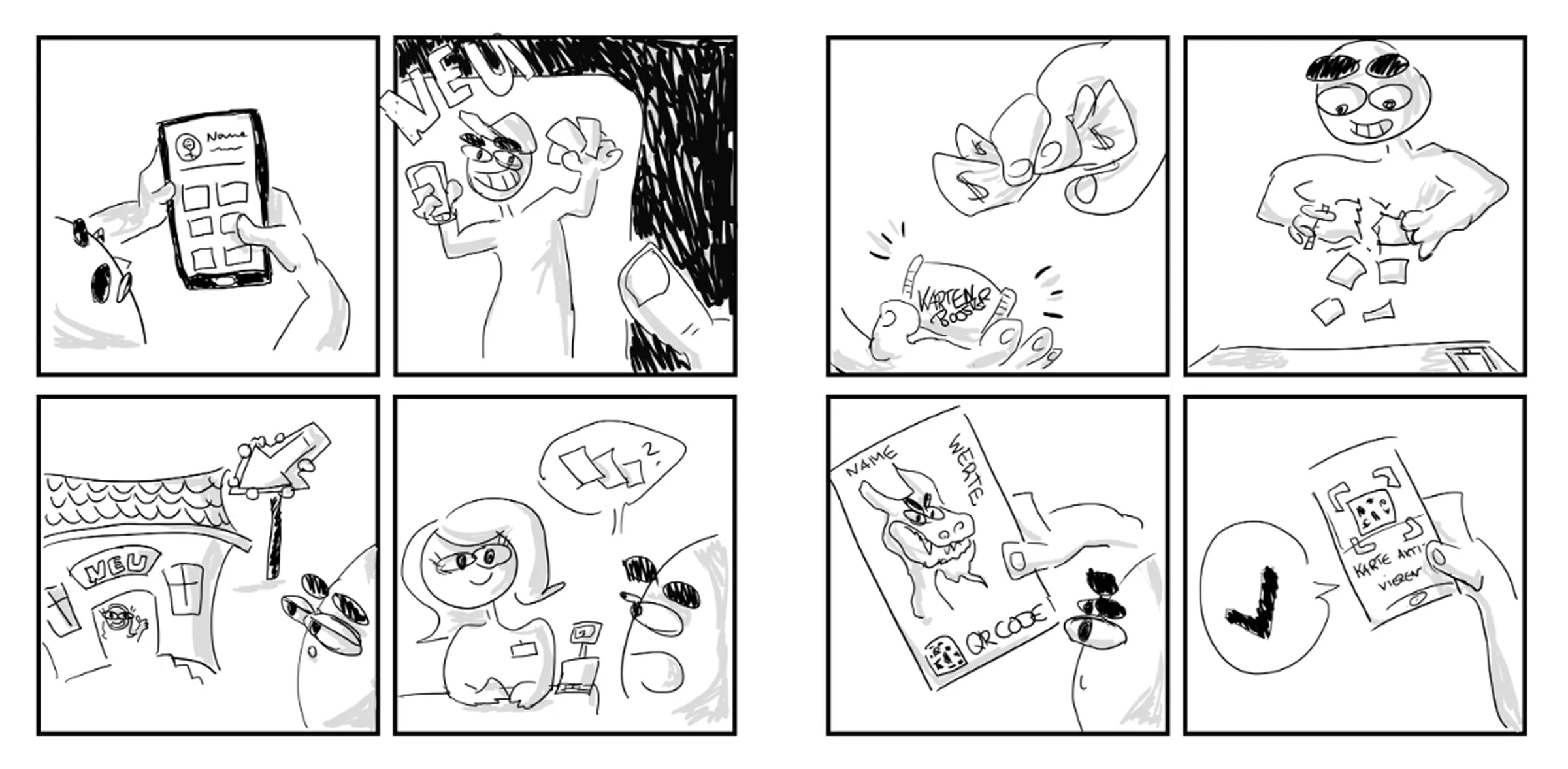
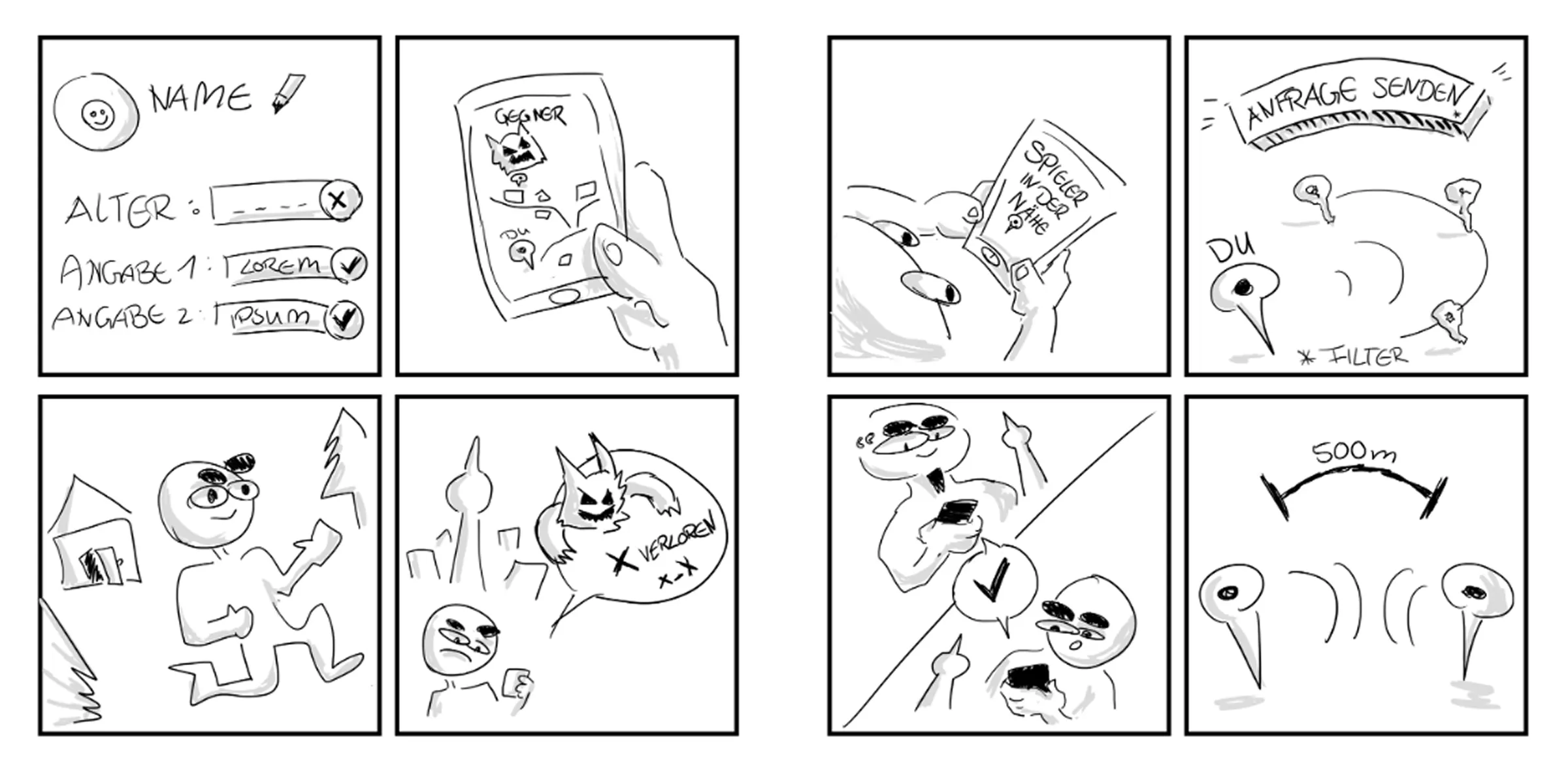
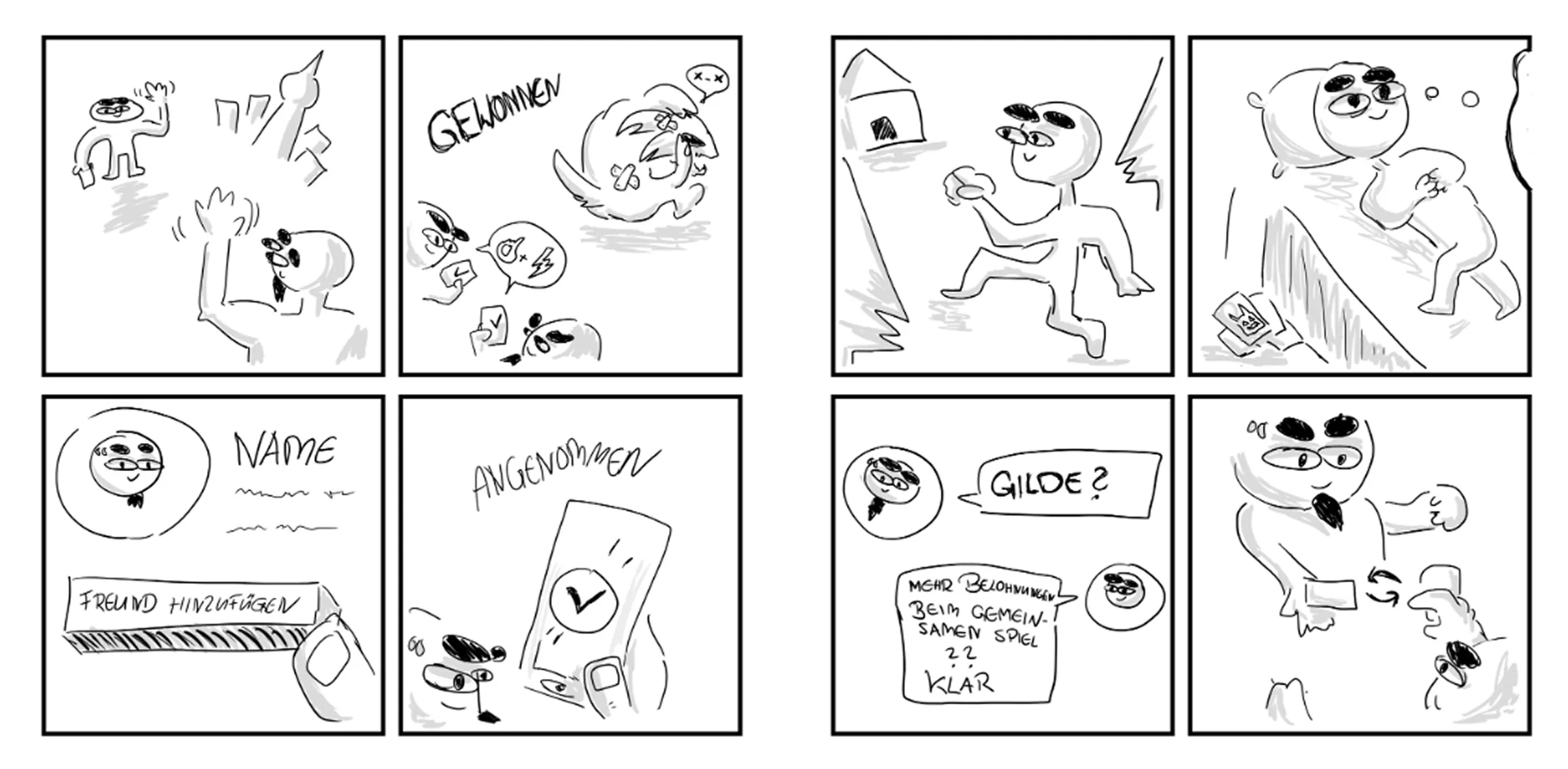
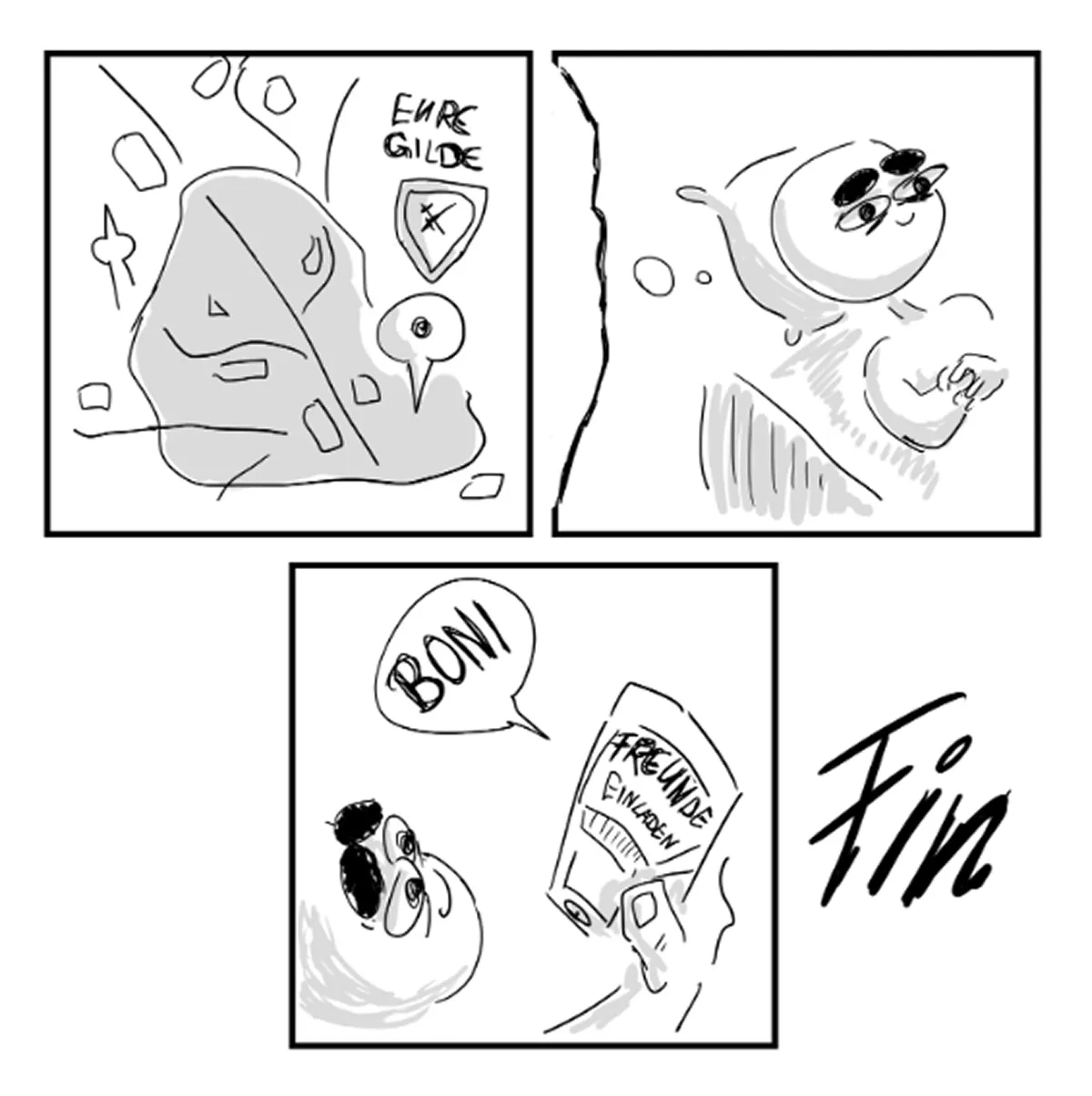
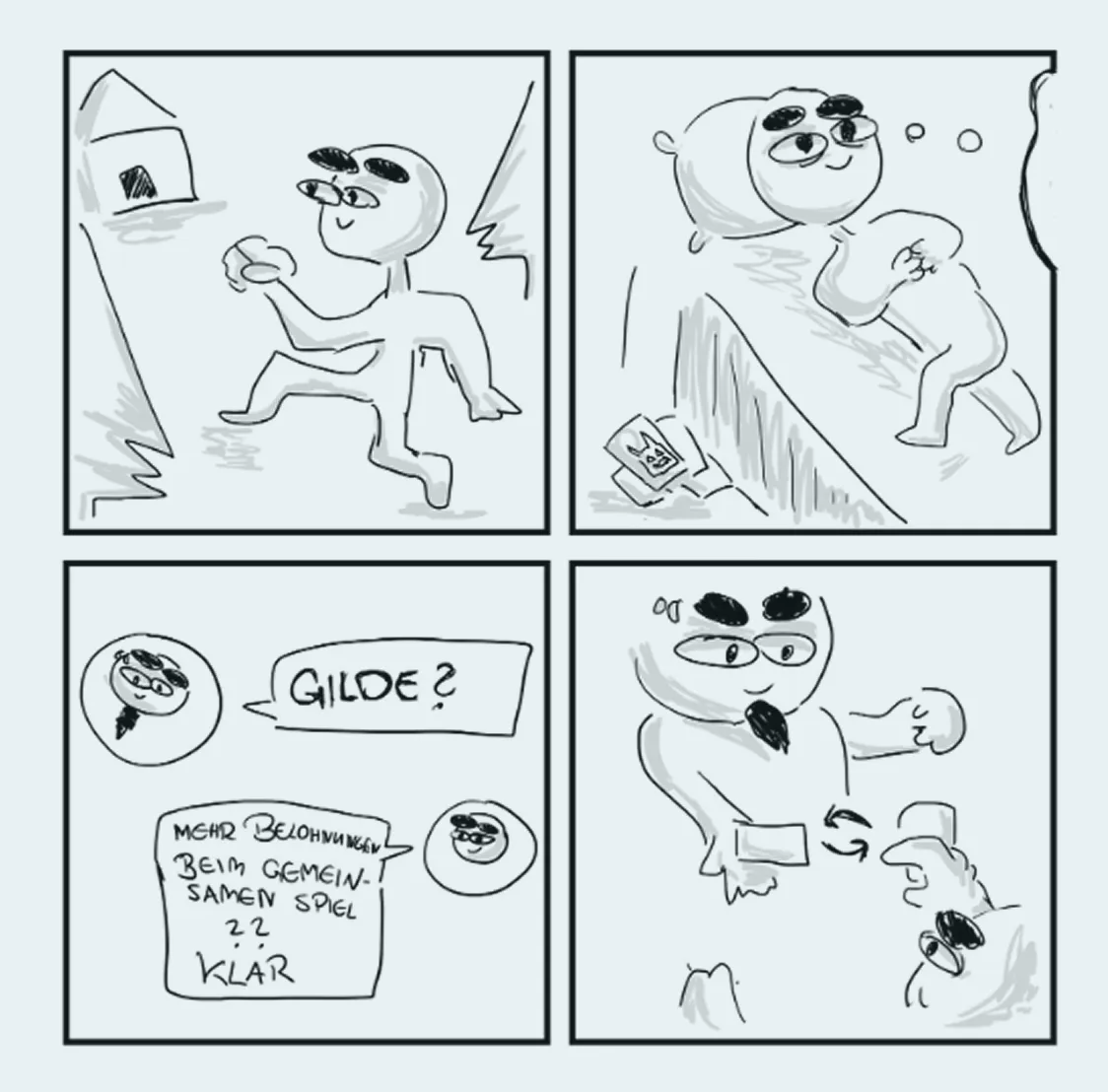
The result is not a finalized product but a detailed service blueprint presented as a user journey. It outlines the experience step by step, from discovering the concept on social media and acquiring the cards to participating in battles, forming a guild, and engaging in shared offline activities.
Service Blueprint:
1.Discovering the Product and Purchasing the Cards
Users encounter Street Match through social media, purchase the physical card set at a local store, create and verify an online account, and connect their drafted cards to the platform.
2.Registration and Joining Battles
After registering, the player searches for a local battle in their area. Initially participating alone, they encounter challenges that encourage them to team up with others. By forming a group, they increase their chances of success.
3.Adding Friends and Forming a guild
After a battle, players can add each other to their friends list to coordinate future activities. More experienced members may invite others to join a local guild, strengthening longer-term connections within the same area.
4.Ending the day with a sense of connection and joy
After participating in the activities, the player reflects positively on the experience and the newly established connections. The structured interactions create accessible social opportunities. As part of the system mechanics, a bonus is granted for joining a guild.
Reflection
This project marked my first holistic engagement with service design. Mapping the entire lifecycle of a concept, from initial awareness to long-term impact, shifted my perspective from isolated features to systemic thinking.
Facilitating the workshop in a structured format was new in this context, but it felt familiar due to my background in social work. It highlighted strengths in moderation and communication that I plan to develop further. The project also strengthened my interest in strategic product thinking and service systems.
Given the depth of research, we focused on developing a robust concept rather than a finalized product. In retrospect, a mobile prototype would have added value, though the scope was appropriate for the semester timeframe.
Working with the participant group required flexibility. Deadlines were inconsistently met, sessions had to be rescheduled, and not all probes were returned. If repeated today, I would define clearer timeframes, simplify the probes, and sharpen the research focus. While the insights were highly personal and valuable, not all directly informed the concept and could have been streamlined.